
Hunger is back to pandemic levels where 26% of San Diegans can’t access 3 nutritious meals a day. Learn more from our latest Issue Brief.
More than 1 in 4 people in San Diego County is nutrition insecure.
San Diego Hunger Coalition estimates that, as of September 2025, more than 1 in 4 (26%) San Diegans experience nutrition insecurity, or are unable to provide three, nutritious meals per day for themselves and/or their families. This marks eight months of continual increases in nutrition insecurity, which rose to pandemic levels in January 2025 and continues to rise through September.
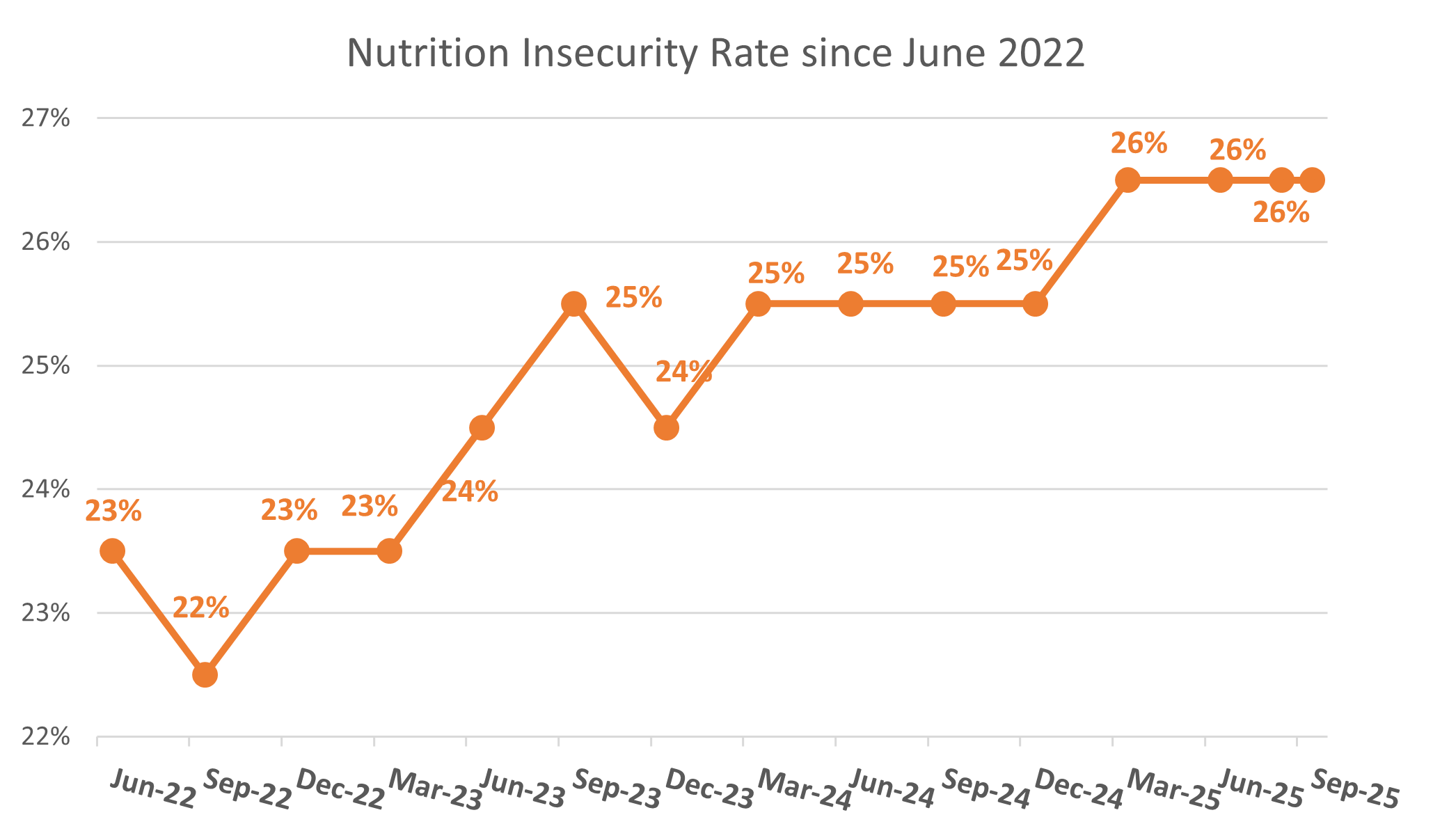
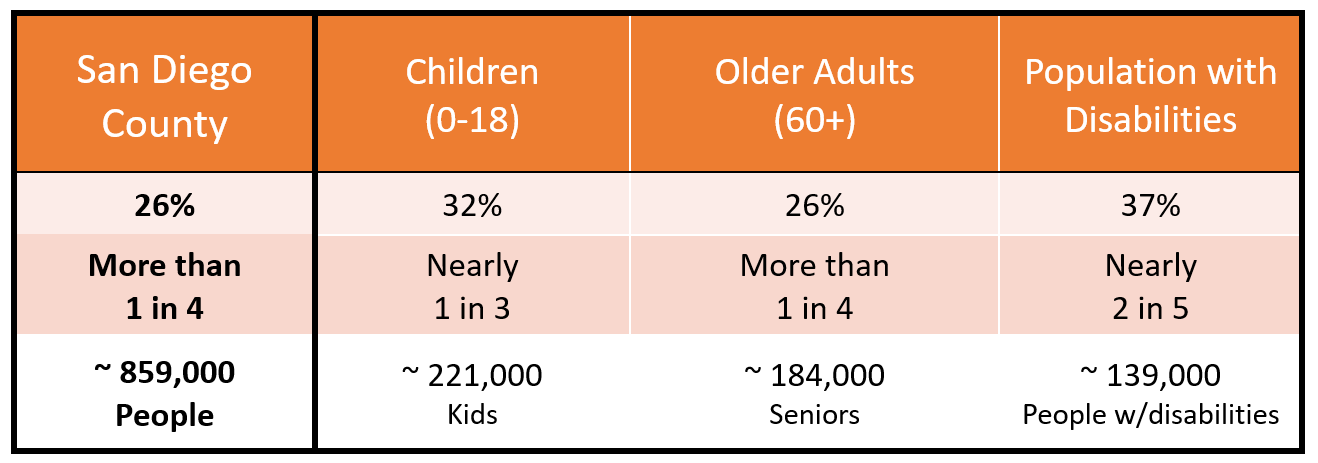
Out of the 859,000 total people estimated to be nutrition insecure in San Diego County, 221,000 of them are children, 184,000 are older adults (age 60+), and 139,000 of them are living with disabilities.
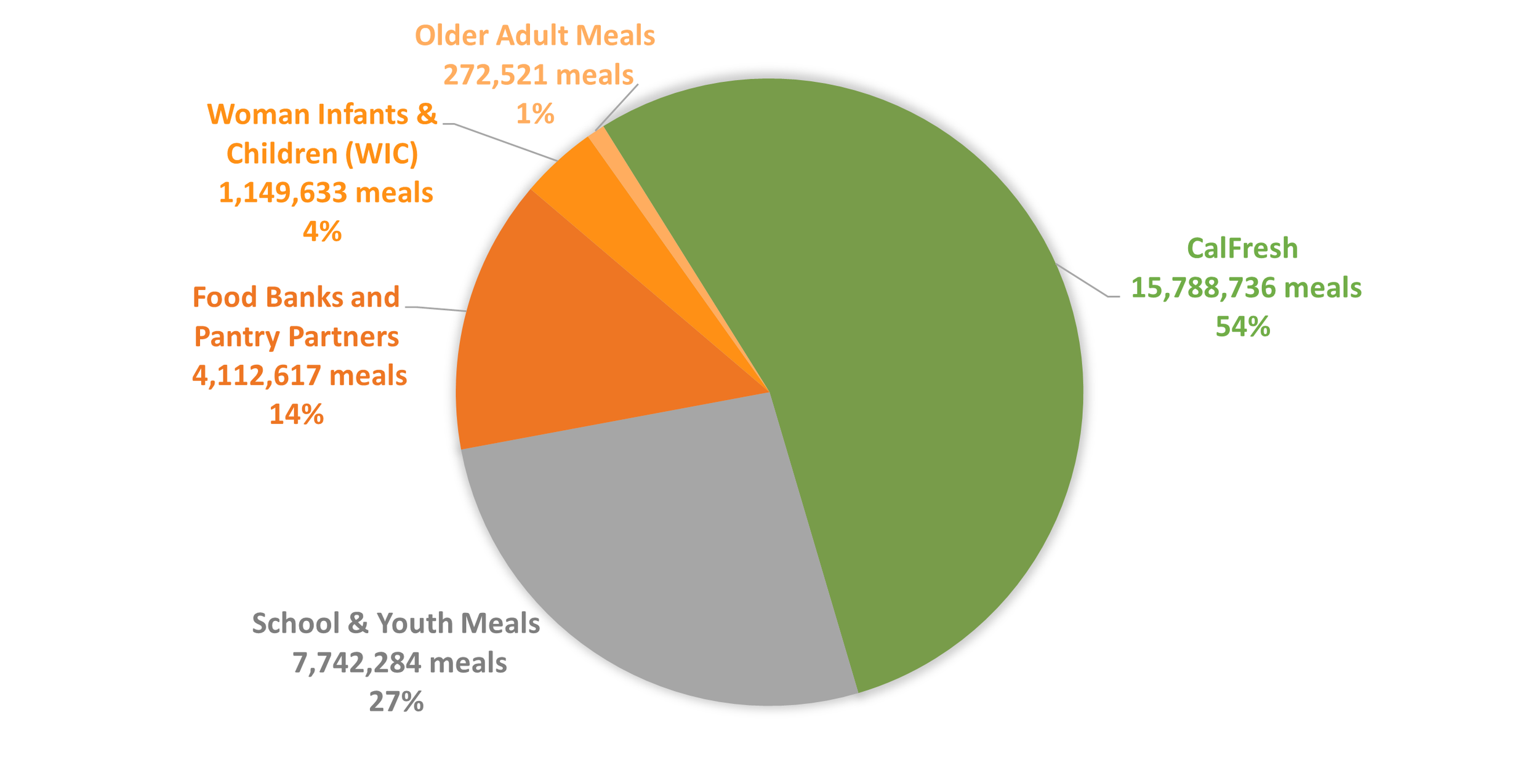
Food Assistance: The hunger relief sector provided 29.1 million meals in food assistance in September.
In September 2025, the hunger relief sector in San Diego County provided 29.1M million meals across all programs, meeting 85% of the estimated need for food assistance.
Of the 29.1M meals that were provided, 15.7M (54%) meals came from CalFresh, followed by school meals, food banks and pantries, WIC, and meals for older adults. The pie chart below shows the breakdown in more detail.
Meal Gap: Another 5.2M meals would have been needed for a hunger free region
Despite the millions of meals that came from food assistance in September, the county was still short by almost 5.2M meals, meaning thousands of families around the county went hungry during the month, with areas such as University City, Escondido, College Grove, and Fallbrook all having the highest meal gaps. To see a map of the meal gap and other data points, click here.
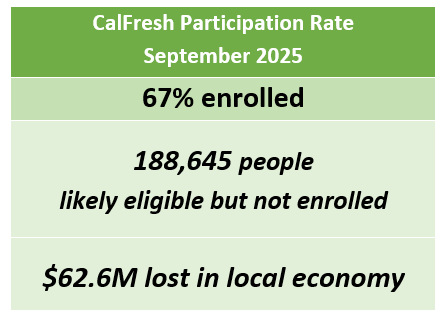
The Hunger Coalition has also identified an additional 188,000 people who are likely eligible for CalFresh but not yet enrolled, showing great potential to reduce the meal gap by increasing CalFresh participation.
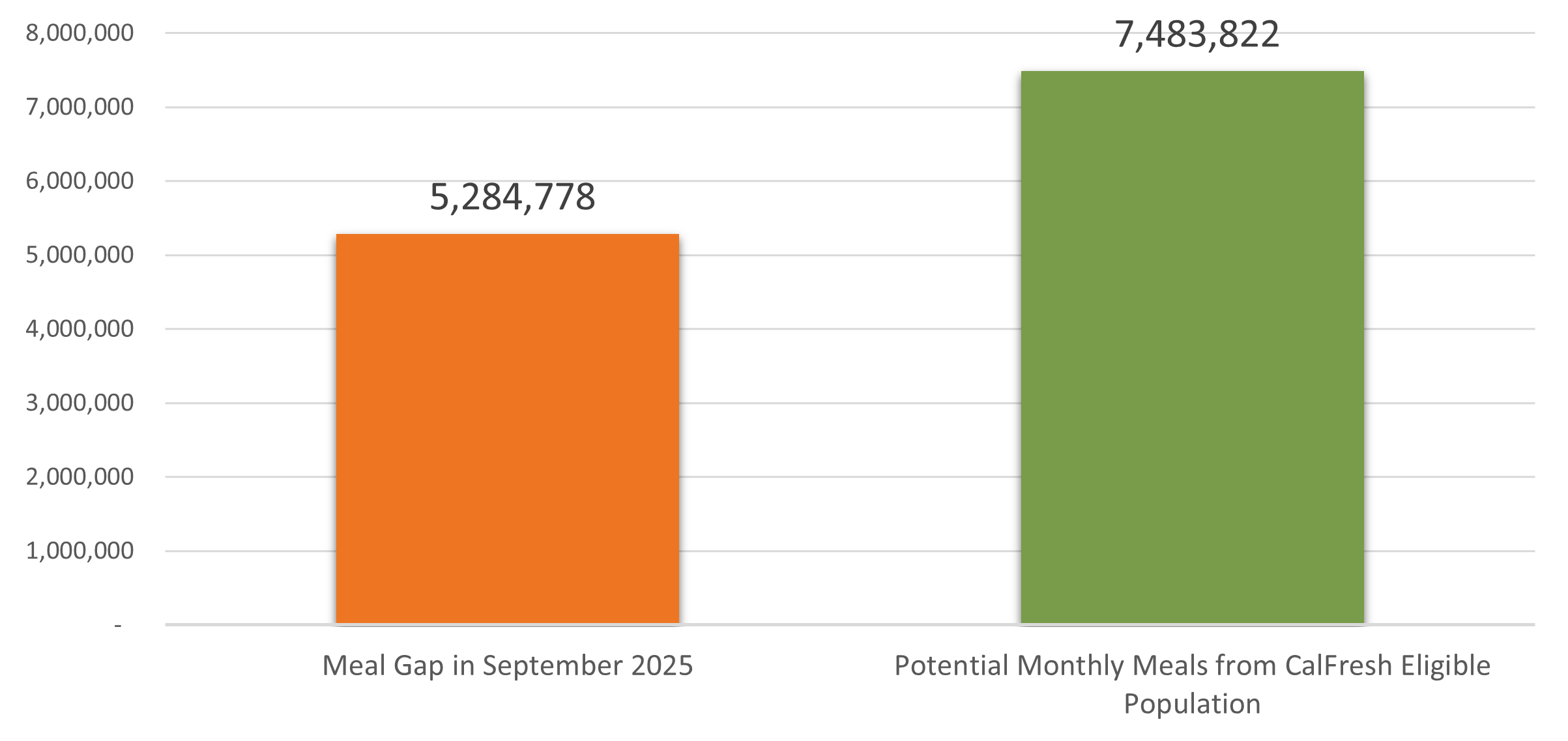
Enrolling all eligible families is the best way to decrease hunger and mitigate the effects of the loss of the temporary federal programs, as providers struggle to keep up with the increased need. If all CalFresh eligible people were enrolled, it would provide another 7.4M meals monthly to the county, erasing the meal gap in most months. For more information on where likely eligible populations are and for CalFresh participation numbers, click here.
Nutrition Security and Equity
Nutrition insecurity also disproportionately impacts Black people, Indigenous people, and people of color. The nutrition insecurity rates of these communities are all above the average, as can be seen below.
23% of the Native population
17% of the White population
20% of the Asian population
30% of the Hispanic/Latinx population (across all nationalities)
33% of the Black population
Additional analysis of the nutrition insecure population shows that Hispanic/Latino people make up 33% of the county population, yet they constitute 50% of the nutrition insecure population, which is the largest disparity by race/ethnicity in our region. Data on race/ethnicity is annual, currently estimating San Diego County in 2023.
Methodology
These estimates come from SDHC’s analysis of the estimated population at risk of nutrition insecurity. We define this population as households with incomes below 225% of the Federal Poverty Level (FPL) ($72,000 for a family of 4). For the meal gap calculations, we track food assistance data gathered from local agencies and nonprofit partners, with ongoing recommendations from the Hunger Free San Diego Advisory Board. To discuss our detailed methodology please contact us at info@sdhunger.org.